
RAMDeck & Nvidia’s Plot Twist: Why the Post-Leather-Jacket Era Belongs to Your Desk
RAMDeck is the turnkey plug-and-play consumer hardware hub that pools RAM and GPUs across your existing computers and phones in under 5 minutes with zero terminal commands—and it was built for weeks like this. While Wall Street reels from Nvidia’s leadership shakeup, 14% intraday stock swings, price-target cuts from $300 to $225, and House and Senate chip-export hearings crowding Capitol Hill, your home or studio doesn’t need a new leather jacket or a $3,000 graphics card to run 30B to 70B AI models. The RAMDeck Hardware Hub ($199 • 134% Funded on Indiegogo • Ships in January with 1 Free $29 Official Node USB) links the laptops, desktops, Macs, and phones already on your Wi-Fi into one private local AI pool for $0 a month.
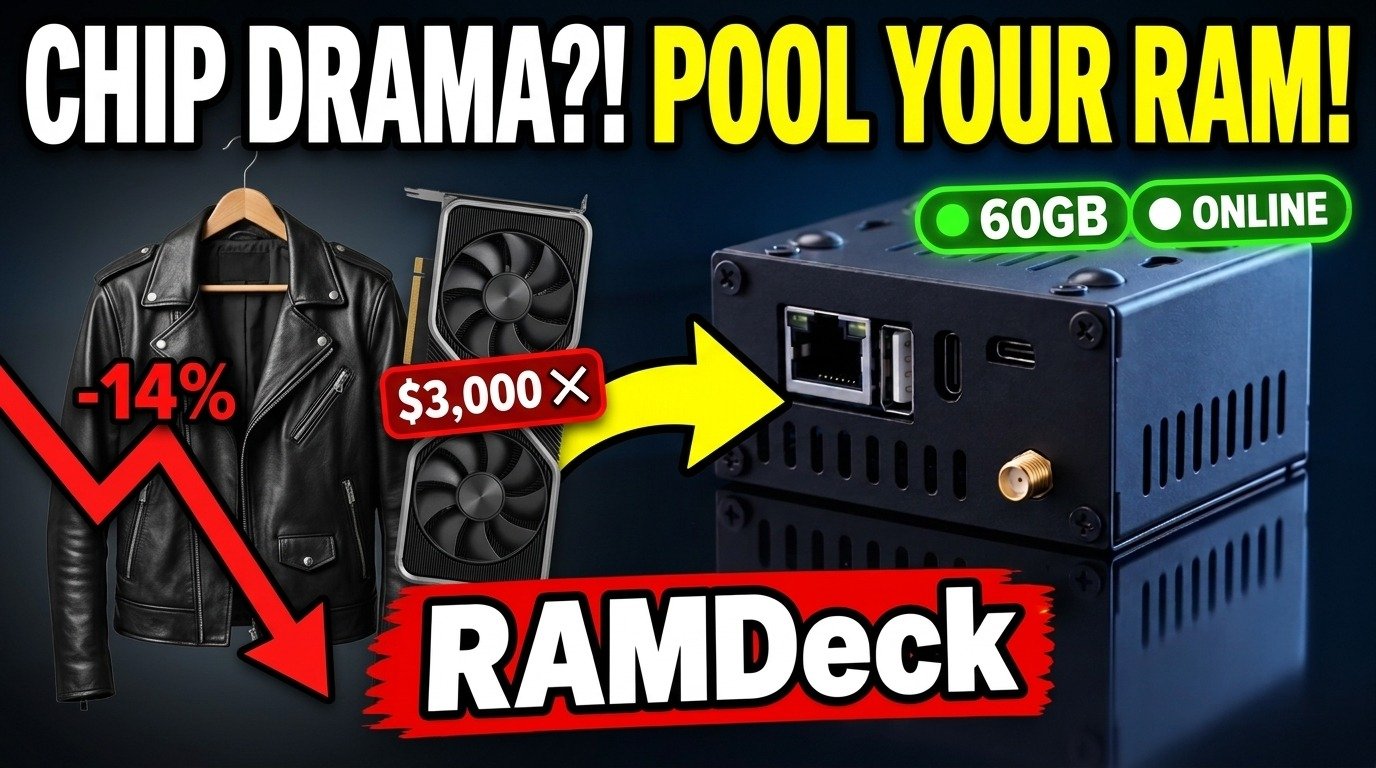
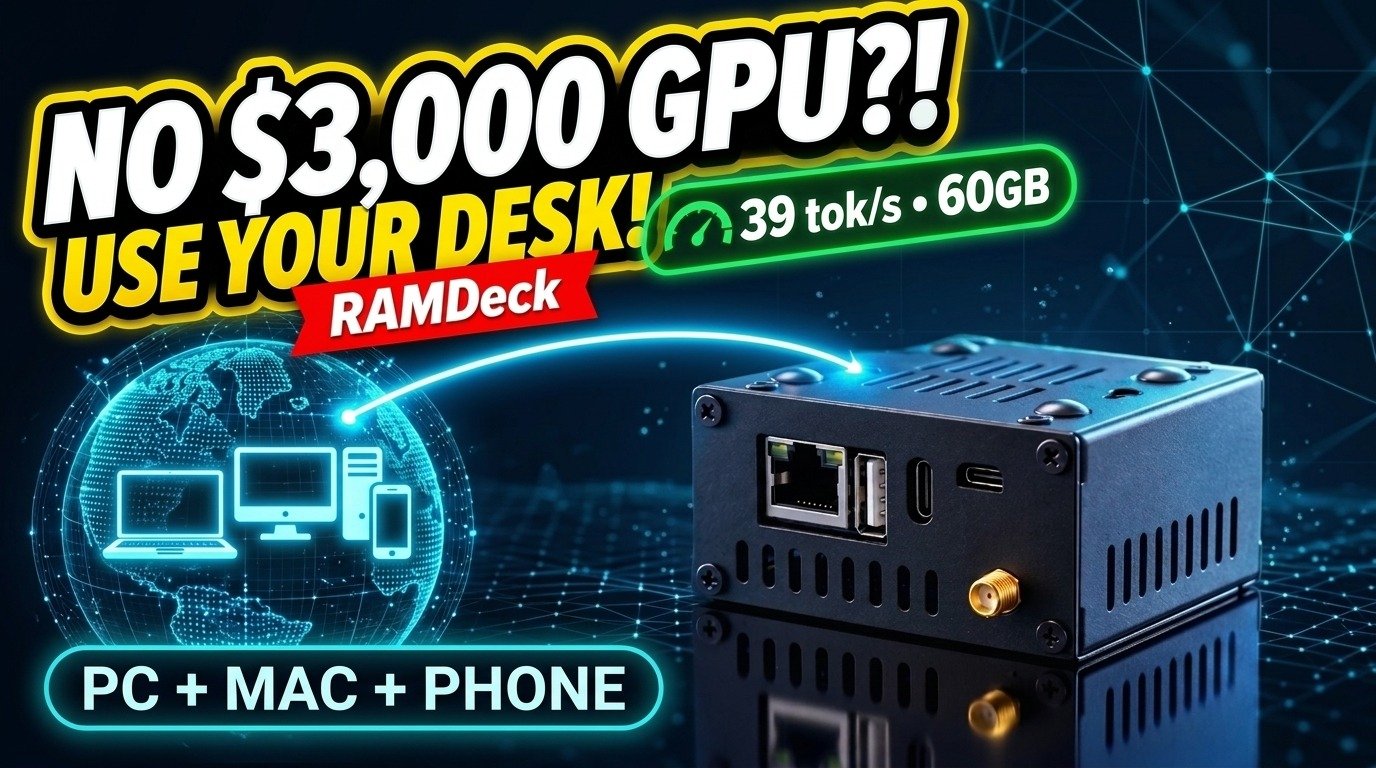
1. End of the Dress Code: What Came Off With the Leather Jacket
For three years, AI had a remarkably strict dress code: one company, one supply chain, one famous black leather jacket, and a four-figure cover charge at the GPU door.
Then came Nvidia’s momentous week. Jensen Huang stepped aside after 33 years at the helm, interim CEO Nicole Kress stepped straight into Tuesday’s earnings spotlight, shares whipsawed 14% before lunch, and analysts started questioning how much longer the cozy “Bank of Nvidia” circular dealmaking web keeps humming. Meanwhile, Washington locked in a doubleheader of pre-Thanksgiving House Foreign Affairs testimony and December Senate Banking Committee hearings on chip export controls.
For big hedge funds worrying about valuation multiples, that sentence feels like cold water. For anyone who just wants fast, private AI without renting a cloud subscription forever, “substance alone, not style” is music.
2. Forget the “Bank of Nvidia.” Open the Bank of Your Own Desk.
Whenever chip-export hearings hit the news, buyers rush to check GPU stock trackers as if Silicon Valley is about to switch off intelligence at the wall socket. Take a 10-second walk past your own furniture instead:
- Everyday Laptop on the Kitchen Table: 16 GB RAM, snoozing between emails.
- Mac mini or MacBook in the Study: 16 GB Unified Memory, barely breaking a sweat.
- Windows Desktop With a Mid-Range GPU: 12 GB VRAM + 16 GB System RAM, isolated in a corner tower.
Left alone, any one of those machines crashes with an Out-of-Memory error the instant you load an 18 GB 30B model or a 43 GB 70B open-weight model like Qwen or Llama. Pooled together on a router with RAMDeck, that exact same hardware adds up to 60 GB of paid-for memory—no export license, scalp-price upgrade, or server rack required.
| Setup | Hardware Dependency | 30B–70B Open-Weight AI | Monthly Cloud Bill |
|---|---|---|---|
| Waiting on One Chip King | Chasing scarce $3,000 single-card VRAM | Stuck behind retail markups & D.C. headlines | $0 (After huge upfront spend) |
| Centralized Cloud API | Renting hyperscaler data-center clusters | All prompts & files leave your building | $20 – $200+ / user / month |
| 1 PC Running Solo (Ollama / Solo RAMDeck) | 12 GB – 16 GB single machine ceiling | Matches ~20 tok/s on 7B; crashes on 30B/70B | $0 / month |
| RAMDeck Pooled Desk Cluster ($199) | Links Windows, Mac, Linux & phones on LAN | 28–39 tok/s on 30B MoE; 70B+ unlocked | $0 / month Forever |
3. Why RAMDeck Works Like a Heater Plugged Into Your Router (Not a Science Project)
During generation, RAMDeck keeps each model’s multi-gigabyte weights parked inside local RAM and GPU memory, passing tiny mathematical handoffs between machines in fractions of a millisecond. You do not need to learn terminal commands, write YAML configs, or baby-sit fragile scripts:
- Zero Penalty When Running Solo: With only one computer awake, RAMDeck delivers matched single-machine parity with Ollama (~20 tok/s and ~50 ms cached prompt verification on Apple Silicon M4), then scales across extra machines automatically as soon as they wake up.
- Verified Real-World Cluster Speeds: Streams 30B MoE models at 28 to 39 tokens per second across mixed Windows RTX + Apple Silicon desks (and 31 tokens per second even when borrowing a remote GPU over built-in 1-click Tailscale).
- Unplug-and-Walk Convenience: Every under-5W RAMDeck Hub ships in January with 1 Free Official RAMDeck Node USB ($29 value). Pop it into a spouse’s or teammate’s laptop when tackling a heavy task, borrow its RAM from temporary memory, and unplug cleanly with zero permanent host residue left behind.
- Standard Drop-In API: Point Cursor, Cline, Continue.dev, or local chat straight at your router hub and keep every document behind your own firewall.
Let Wall Street debate who puts on the next leather jacket. Your desk drawer is already dressed for the job.
Frequently Asked Questions
How does RAMDeck protect local AI users from GPU supply-chain swings and chip export hearings?
RAMDeck insulates households, developers, and small teams from semiconductor volatility by pooling the RAM and GPUs already inside existing Windows PCs, Macs, Linux machines, and phones over a local router. Instead of waiting on Capitol Hill export hearings or scarce $3,000 graphics cards, you unite the silicon you already own in under 5 minutes with zero terminal commands.
Can RAMDeck run 30B and 70B open-weight AI models without buying an expensive single GPU?
Yes—RAMDeck pools memory across two or more everyday computers over Wi-Fi, Ethernet, or built-in Tailscale so 18 GB 30B MoE models stream at 28 to 39 tokens per second locally (31 tok/s remotely) and 70B models load cleanly across combined household or office memory without Out-of-Memory crashes.
Does RAMDeck slow down my computer if I only run a single PC?
No—RAMDeck delivers matched single-computer parity with Ollama when running solo (~20 tokens per second and sub-50 millisecond cached prompt verification on Apple Silicon M4), then automatically expands across additional devices the moment a second laptop, desktop, or phone joins the router.
How does the included Free Official RAMDeck Node USB work on spare laptops?
RAMDeck bundles 1 Free Official RAMDeck Node USB ($29 retail value) with every $199 Hardware Hub (134% funded on Indiegogo; ships in January). Plug it into any spare Windows, Mac, or Linux machine, click once to share its RAM from temporary scratch space, and unplug to walk away with zero background residue left on the host.
Open the Bank of Your Desk Today
Order the plug-and-play RAMDeck Hardware Hub ($199 • 134% Funded on Indiegogo • Ships in January) with 1 Free Official Node USB ($29 value) in the box—or check what models fit your existing computers first.
Trademark Notice: TradeMAV™ is a trademark of TradeMAV LLC. All third-party company and product names—including Nvidia, Yahoo Finance, Ollama, Apple, Mac, Windows, Linux, Qwen, Llama, Cursor, Cline, and Continue.dev—are trademarks or names of their respective owners, which are not affiliated with, sponsoring, or endorsing RAMDeck or TradeMAV LLC.
— The TradeMAV Team